
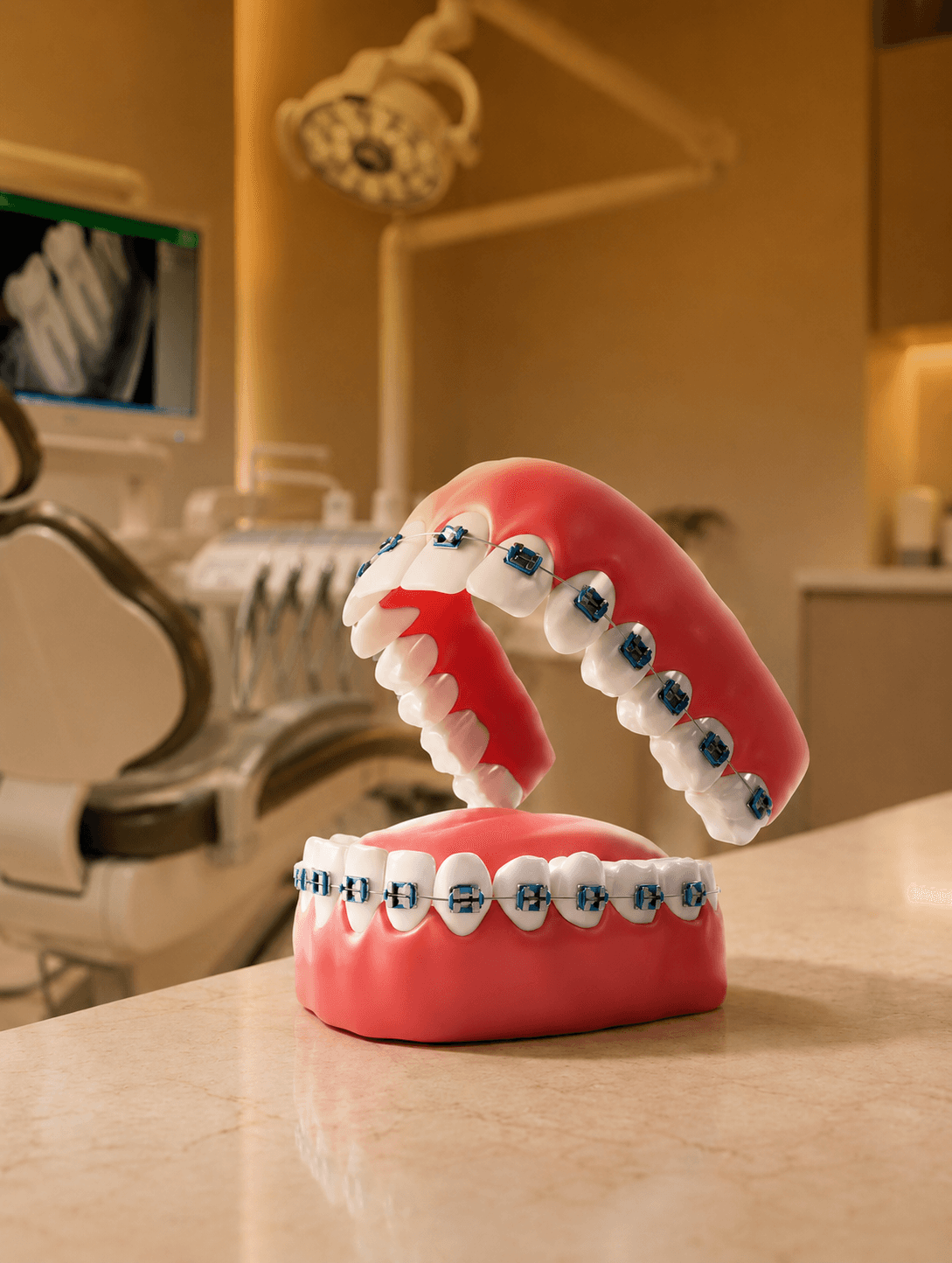
Introduction to orthodontics
Orthodontics is the part of dentistry that moves teeth into better positions and guides how the jaws line up. Most people think of it as a way to get straighter teeth, and that's a big part of it. The bigger goal is a bite that works properly: teeth that meet evenly, a jaw that moves comfortably, and a smile that's easier to keep clean for the rest of your life.
Teeth move when gentle, steady pressure is applied over time. The bone around each tooth slowly reshapes as the tooth shifts, which is why treatment takes months. Rushing it isn't safe for the roots or gums, so a good plan moves teeth at a pace your body can handle.
At Zaytoon, every orthodontic case starts with a digital scan and a proper assessment of your teeth, jaws and face. From there we plan the movement tooth by tooth, show you what to expect, and only then start treatment.
Our orthodontic care is led by Dr. Layla Hassan, who focuses on clear aligners and complex bite correction.
Common problems and signs to look for
Some bite problems are easy to spot in the mirror. Others only show up on a scan. These are the ones we see most often:
- Crowding: not enough space for all your teeth, so they overlap or twist. Crowded teeth are harder to clean and collect plaque more easily.
- Gaps and spacing: spaces between teeth, often from small teeth, missing teeth or a habit like tongue thrusting.
- Overbite: the upper front teeth cover too much of the lower ones when you bite down. A deep overbite can wear the lower teeth or hurt the gums behind the upper teeth.
- Underbite: the lower teeth sit in front of the upper teeth. This often involves jaw growth, so an early check helps.
- Crossbite: some upper teeth bite inside the lower teeth. Left alone, it can cause uneven wear and push the jaw to one side.
- Open bite: the front teeth don't touch when the back teeth are closed, which makes biting into a sandwich awkward.
- Protruding front teeth: upper teeth that stick out are more likely to get chipped in a fall or during sport.
Many people have more than one of these at the same time. That's normal, and it's why we plan from a full assessment rather than fixing one tooth at a time.
You don't need a dentist to tell you something feels off. Book an assessment if you notice any of these in yourself or your child:
- Teeth that overlap, twist or have obvious gaps
- Often biting your cheek or the roof of your mouth
- Jaw clicking, soreness or tiredness after chewing
- Trouble biting or chewing certain foods
- Breathing through the mouth most of the time
- Baby teeth falling out very early or very late
- Thumb or finger sucking past the toddler years
- Feeling self-conscious about smiling in photos
None of these means you definitely need braces. They're simply good reasons to get checked.
The right age, and who it's for
There's no single right age, but there is a right time to get checked, and for children that's earlier than most parents expect.
Children (around age 7): by this age the first adult molars and front teeth have usually come through, so we can see how the bite is developing. Most children don't need treatment yet. A check now lets us spot problems like crossbites or jaw growth issues early, when they're easier to guide.
Early treatment (ages 7 to 10): a small number of children benefit from a short first phase, for example to widen a narrow upper jaw or make room for adult teeth. This can make later treatment shorter or simpler. We'll only suggest it if it really helps.
Teens (ages 11 to 16): the most common time for braces or aligners. Most adult teeth are in, the jaws are still growing, and teeth tend to move well.
Adults: there's no upper age limit. As long as your teeth and gums are healthy, teeth can be moved at any age. Plenty of adults start treatment in their 30s, 40s and beyond, either because they never had the chance as teenagers or because their teeth shifted after earlier braces. Adult treatment can take a little longer, and we keep a closer eye on gum health along the way.
Orthodontics suits anyone who wants straighter teeth or a more comfortable bite and has a healthy mouth to start from. It's a good fit if you:
- Want to fix crowding, gaps or a bite problem
- Had braces before and your teeth have moved back
- Need teeth lined up before other work, like implants, crowns or veneers
- Have jaw discomfort linked to the way your teeth meet
There are a few cases where we'll pause first. Active gum disease, untreated decay or loose teeth need to be sorted before teeth are moved. If that's you, we'll treat those first and start orthodontics once your mouth is ready. Some severe jaw problems in adults also need a combined plan with an oral surgeon, and we'll explain that clearly if it applies to you.
Your treatment options
There isn't one best appliance. The right choice depends on your bite, your lifestyle and how much you mind treatment showing. These are the options we offer:
Clear aligners: a series of thin, removable trays made from a 3D scan of your teeth. You switch to a new set every week or two, and each one moves your teeth a little. They're almost invisible and you take them out to eat and brush. The catch is that they only work if you wear them 20 to 22 hours a day.
Metal braces: small brackets bonded to each tooth and connected by a wire. Modern metal braces are much smaller than they used to be. They're fixed in place, so there's nothing to remember, and they handle complex tooth movements very well.
Ceramic braces: they work like metal braces, but the brackets are tooth-coloured so they blend in. A good middle ground if you want fixed braces that are less noticeable.
Retainers and early appliances: for children we sometimes use simple appliances to guide jaw growth or hold space for adult teeth. Everyone who finishes treatment gets a retainer to keep their teeth in the new position.
At your consultation we'll tell you which options suit your case and why. If more than one works, the choice is yours.
How treatment works and how long it takes
Here's what to expect, from your first visit to your final retainer.
- Consultation and 3D scan: we talk about what bothers you, examine your teeth, gums and jaws, and take a digital scan in place of messy impressions. X-rays are taken if needed.
- Your treatment plan: we show you how your teeth will move, which options suit you, how long it should take and what it costs. Nothing starts until you're happy with the plan.
- Fitting: braces are fitted in one appointment. With aligners, you get your first trays and learn how to wear and clean them.
- Regular check-ups: we see you every 6 to 10 weeks to adjust braces or check your aligner progress. These visits are usually short.
- Finishing and retention: once your teeth are in place, braces come off or aligners finish, and we fit your retainers. We keep checking your result for a while after treatment.
Most orthodontic treatment takes between 6 and 24 months. Minor crowding or a small gap might be done in under a year. Bite correction, severe crowding or guiding jaw growth takes longer.
A few things affect your timeline:
- How far your teeth need to move
- Your age and how your bone responds
- The type of appliance you choose
- How closely you follow instructions, especially aligner wear time and elastics
- Keeping your check-up appointments
We'll give you a realistic estimate at the start and keep you updated as you go.
Life with braces, and keeping your result
The first few days with new braces or a new set of aligners usually feel tight or a little sore. That's your teeth starting to move, and it settles quickly. Soft food and regular pain relief help in the meantime.
Eating: with braces, avoid very hard or sticky foods like nuts, ice, toffee and chewing gum, and cut crunchy food into small pieces. With aligners you can eat anything, but take the trays out first and brush before putting them back in.
Cleaning: brush after meals and use interdental brushes or floss threaders around the brackets. Good cleaning during treatment prevents white marks on your teeth once the braces come off.
Sport and daily life: wear a mouthguard for contact sports. Most people stop noticing their braces or aligners within a couple of weeks.
Keeping your result: Teeth naturally try to drift back toward where they started, especially in the first year after treatment. That's why the retainer matters as much as the treatment itself.
You might get a fixed retainer (a thin wire bonded behind your front teeth), a removable clear retainer that you wear at night, or both. We'll explain how long to wear yours and check it at your regular dental visits. Skip the retainer and you risk losing the result you worked for.
Want to see what's possible for your smile? Book a consultation and we'll take it from there.